1. What Is a Ball Valve and How Does It Work?
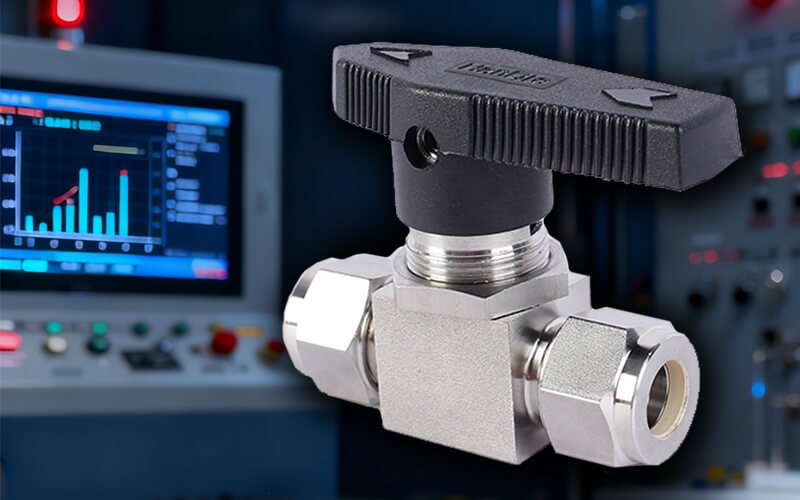
A ball valve is a quarter-turn valve that uses a rotating ball with a bore to control the flow of liquids or gases. When the ball’s hole aligns with the flow path, the valve is open; when turned 90°, it shuts off flow completely.
Ball valves are known for their tight sealing, quick operation, and durability, making them ideal for industrial automation, fluid control, and safety applications.
Our stainless steel ball valves are widely used in sectors such as oil and gas, chemical processing, clean energy, and water treatment—where leak prevention and corrosion resistance are critical.
2. Why Choose Stainless Steel Ball Valves
When selecting industrial valves, the material determines long-term reliability.
OJFLUID 316L stainless steel ball valves offer:
- Excellent corrosion resistance in harsh environments
- High pressure and temperature tolerance (up to 10,000 psig depending on series)
- Smooth internal finish minimizing contamination risks
- Compatibility with hydraulic, pneumatic, and chemical media
For custom needs, we also supply Duplex, 904L, Monel, and special alloys to meet unique industry demands.
3. Main Types of Ball Valves
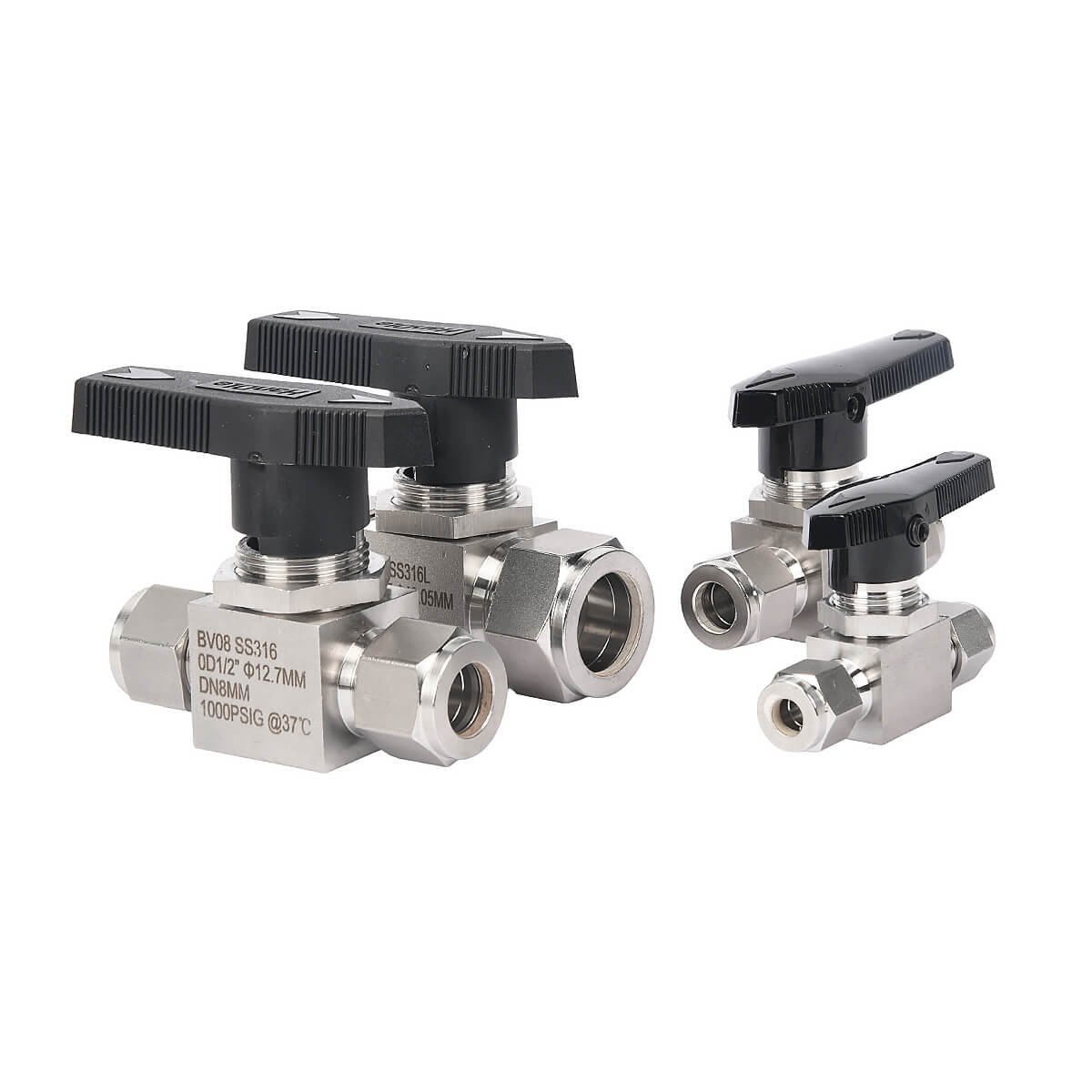
Working pressure up to 3000 psig (207 bar).
Features a compact one-piece body, no dead space, and a live-loaded design for thermal cycle stability.
Available with manual, pneumatic, or electric actuators, and multiple flow configurations (2-way to 7-way).
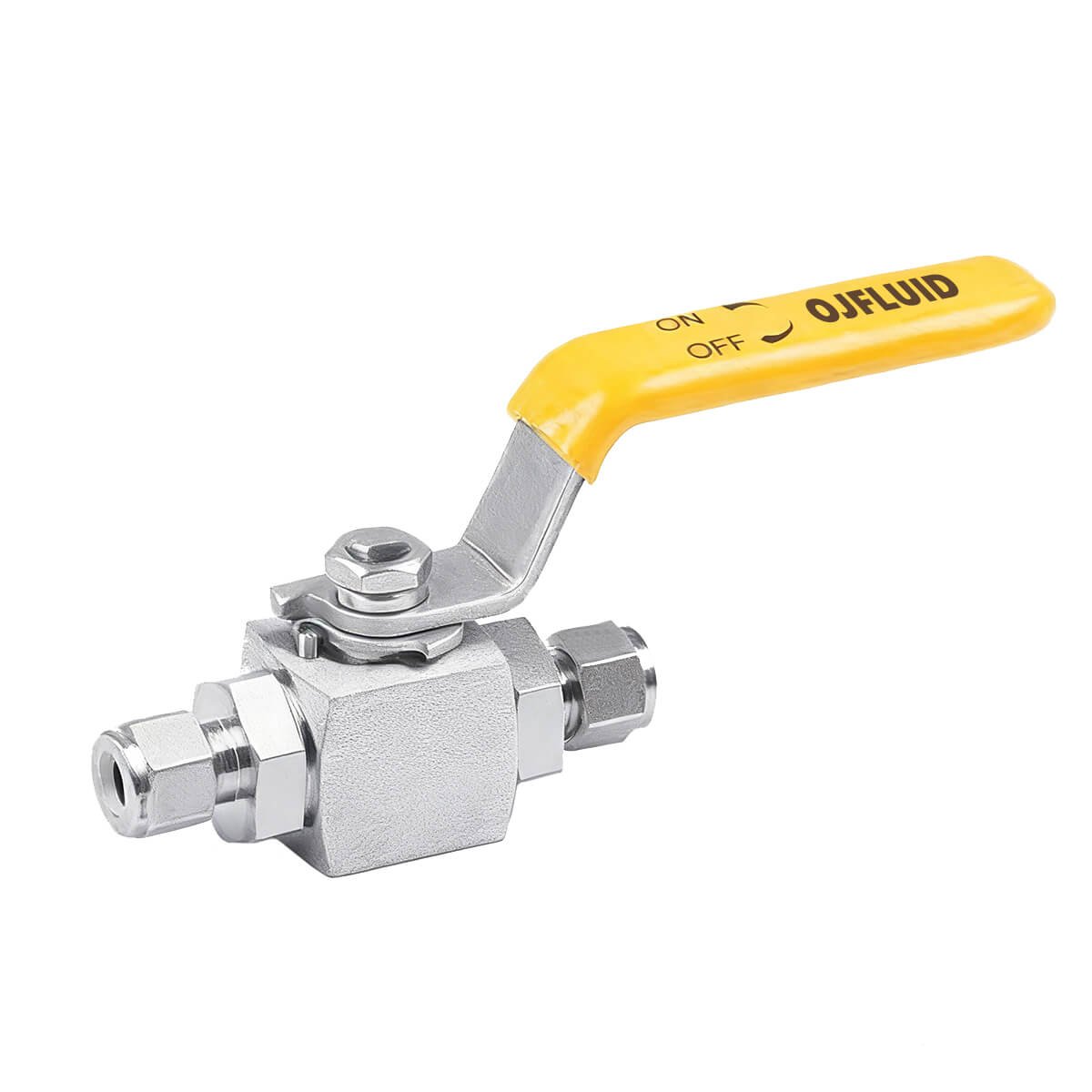
2. Two-Piece and Three-Piece Ball Valves
Designed for easy maintenance and disassembly, suitable for high-cycle systems.
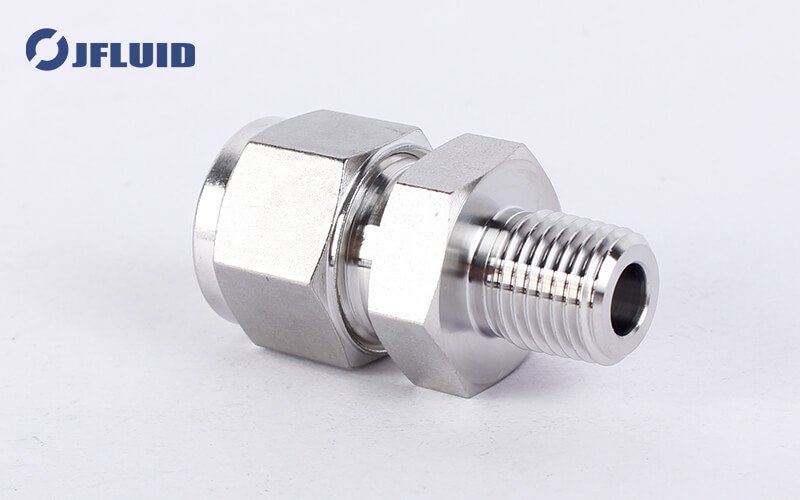
Offer on-off or switching control and support various connection types such as NPT, BSP, and welded ends.
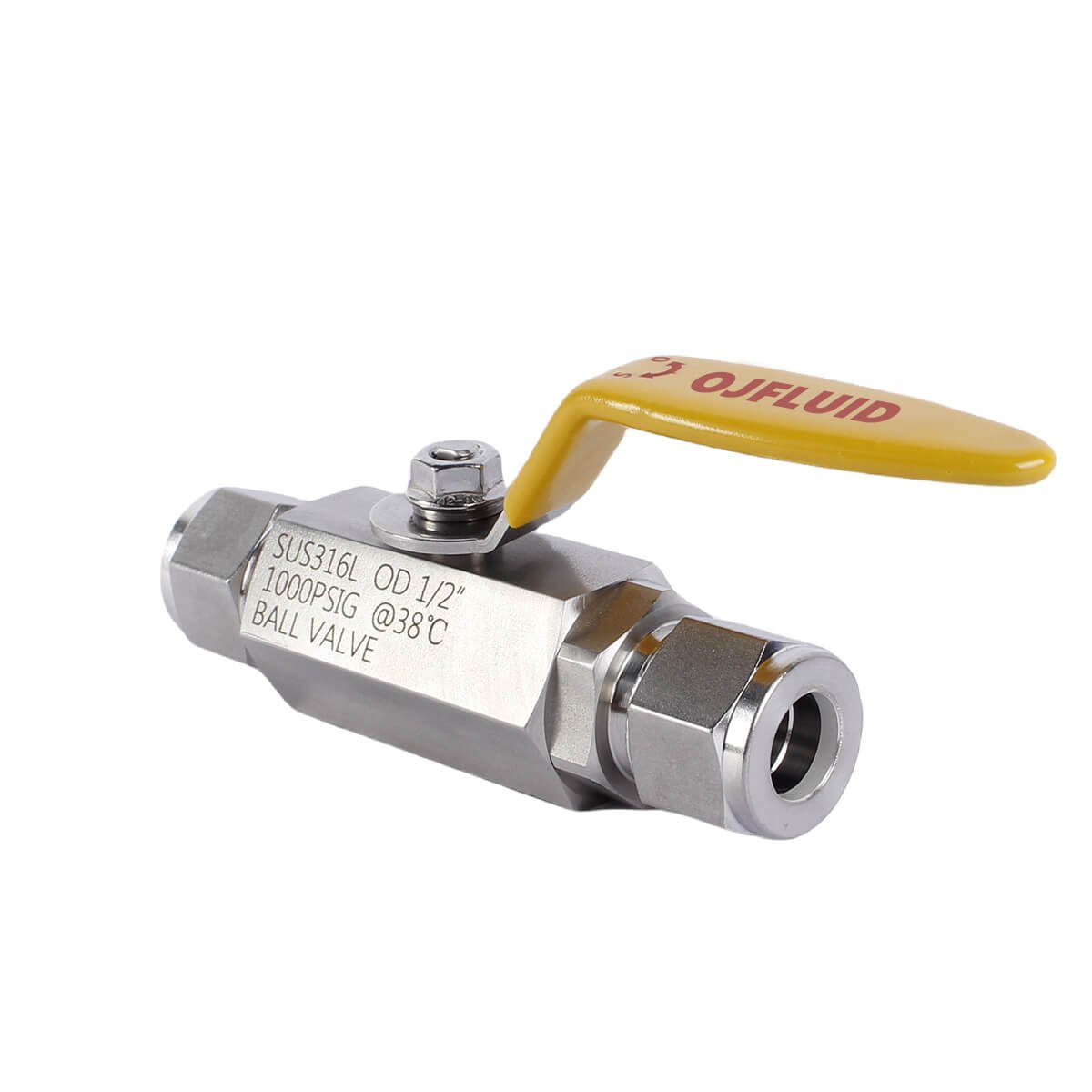
Rated up to 10,000 psig, ideal for demanding environments like oilfield services and test benches.
Engineered with reinforced seats and anti-blowout stems for extra safety.
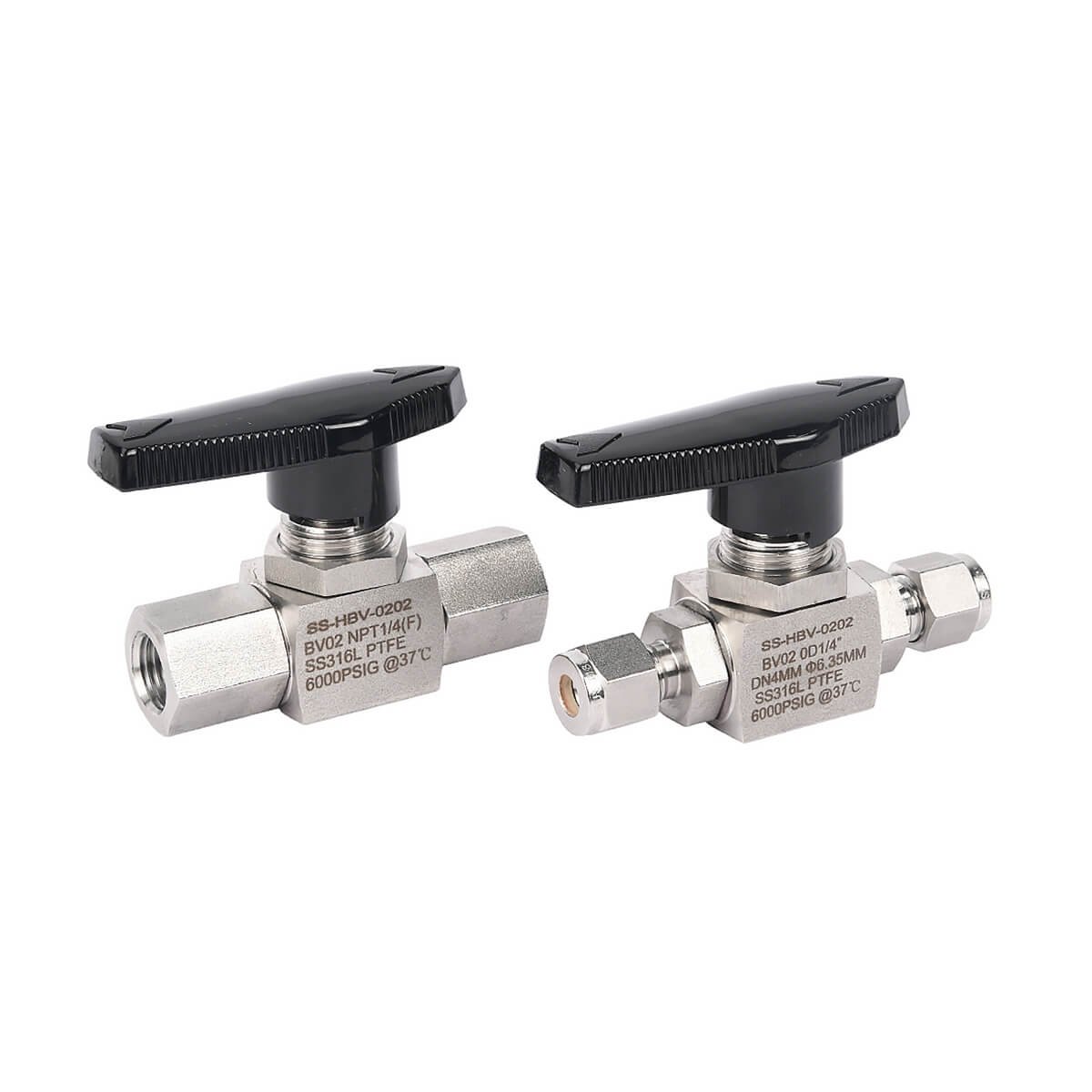
Built with an optimized flow path to reduce actuation torque, extending actuator lifespan and saving energy in automated systems.
4. Application Scenarios Across Industries
Ball valves are versatile components found in almost every industrial fluid system:
- Oil & Gas: Isolation and switching for high-pressure lines.
- Chemical Processing: Corrosion-resistant control for reactive fluids.
- Power Generation: Steam and cooling water regulation.
- Semiconductor Manufacturing: Ultra-clean flow control in gas lines.
- Food & Beverage: Hygienic process piping and CIP systems.
Each series in our portfolio is designed for specific flow control challenges, helping engineers achieve optimal system efficiency.
5. How to Choose the Right Ball Valve
When selecting a valve, consider the following:
- Pressure and temperature rating: Match system conditions with valve specifications.
- Flow configuration: Choose 2-way for isolation, 3-way or 4-way for flow diversion or mixing.
- Connection type: NPT, BSP, compression tube, or welded ends based on installation needs.
- Actuation method: Manual lever, pneumatic, or electric actuator for automation.
- Sealing material: PTFE, PEEK, or metal seats depending on chemical compatibility.
Our engineers assist clients in selecting or customizing valves that meet exact operating and safety standards.
6. OEM/ODM and Global Support
As a professional OEM/ODM valve manufacturer, we not only produce standard valve models but also design customized flow solutions for international clients.
We provide:
- Branding and packaging customization
- Engineering consultation and 3D drawing support
- Pressure and leakage testing before delivery
- After-sales technical support and spare parts supply
With a strong manufacturing base in China and a global service mindset, we help clients achieve cost-effective, reliable, and scalable fluid control systems.
7. Conclusion: Build Confidence in Every Flow
Choosing the right ball valve means ensuring system safety, stability, and efficiency.
Whether you need compact one-piece valves, high-pressure designs, or multi-port solutions, we deliver precision, reliability, and long-term value.
Explore our product series: